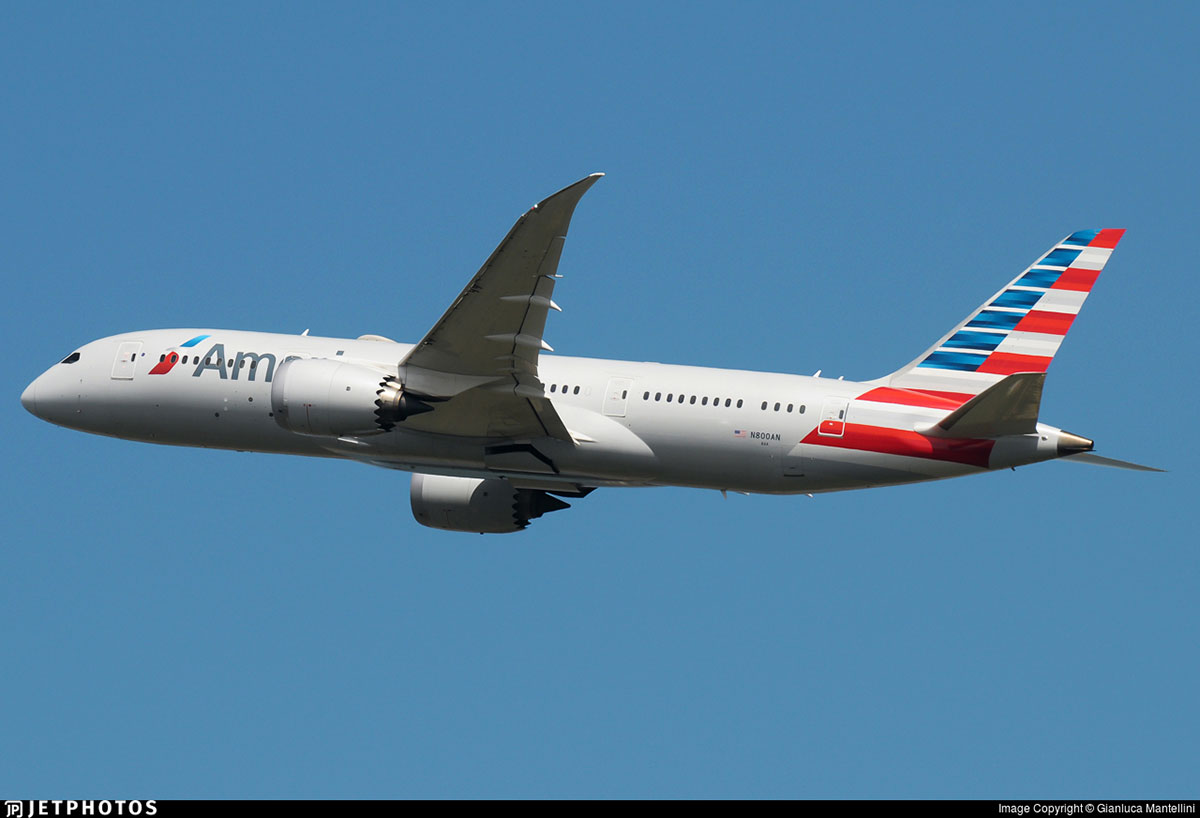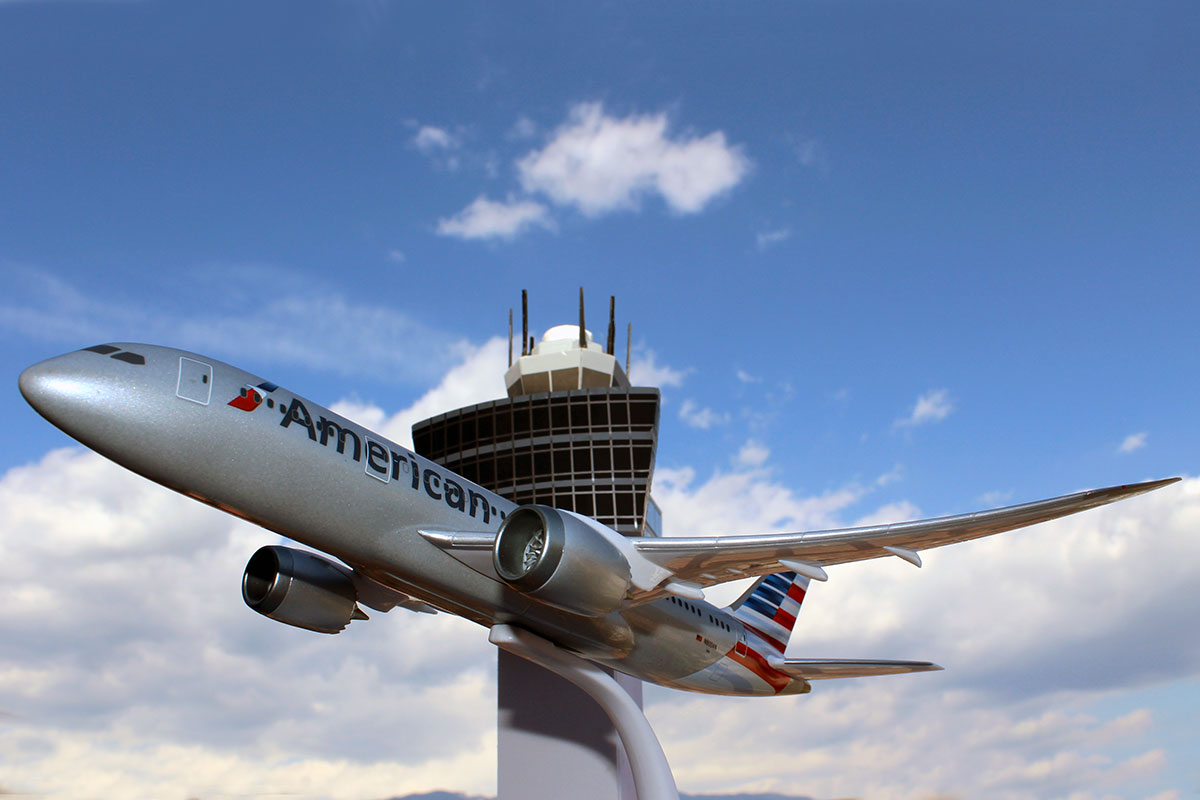
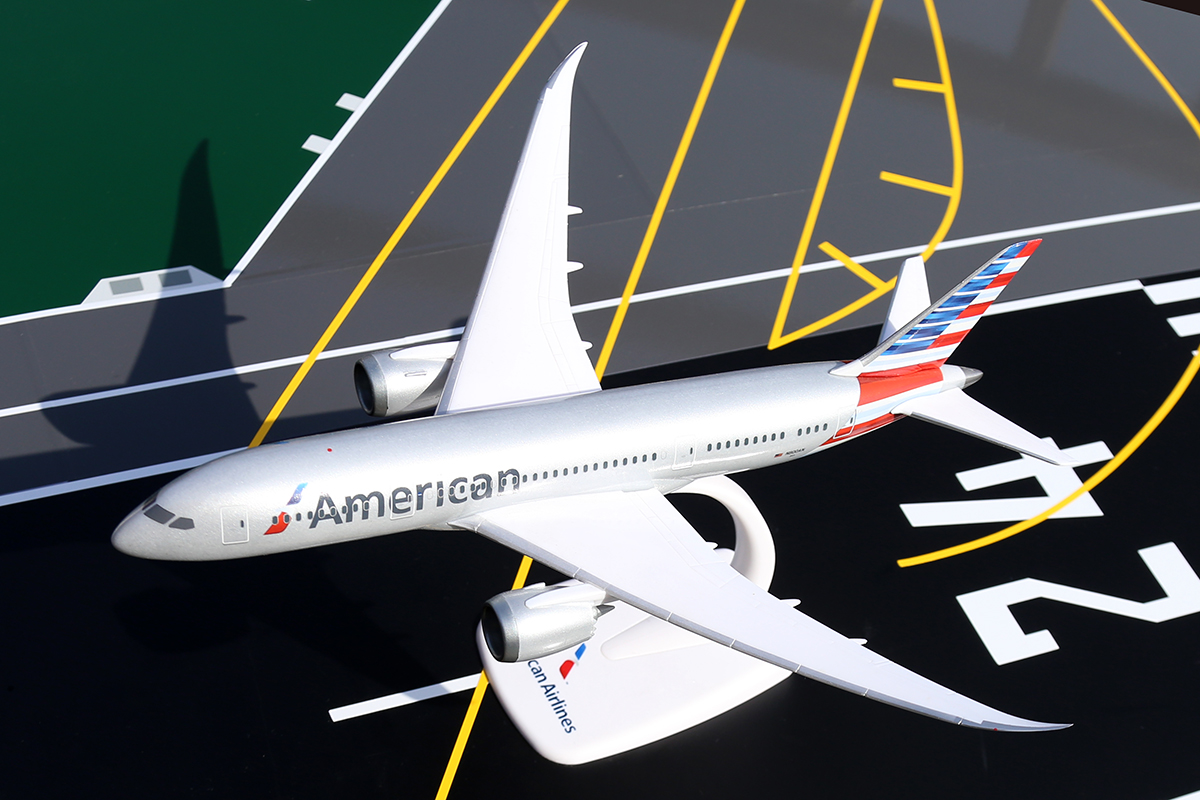
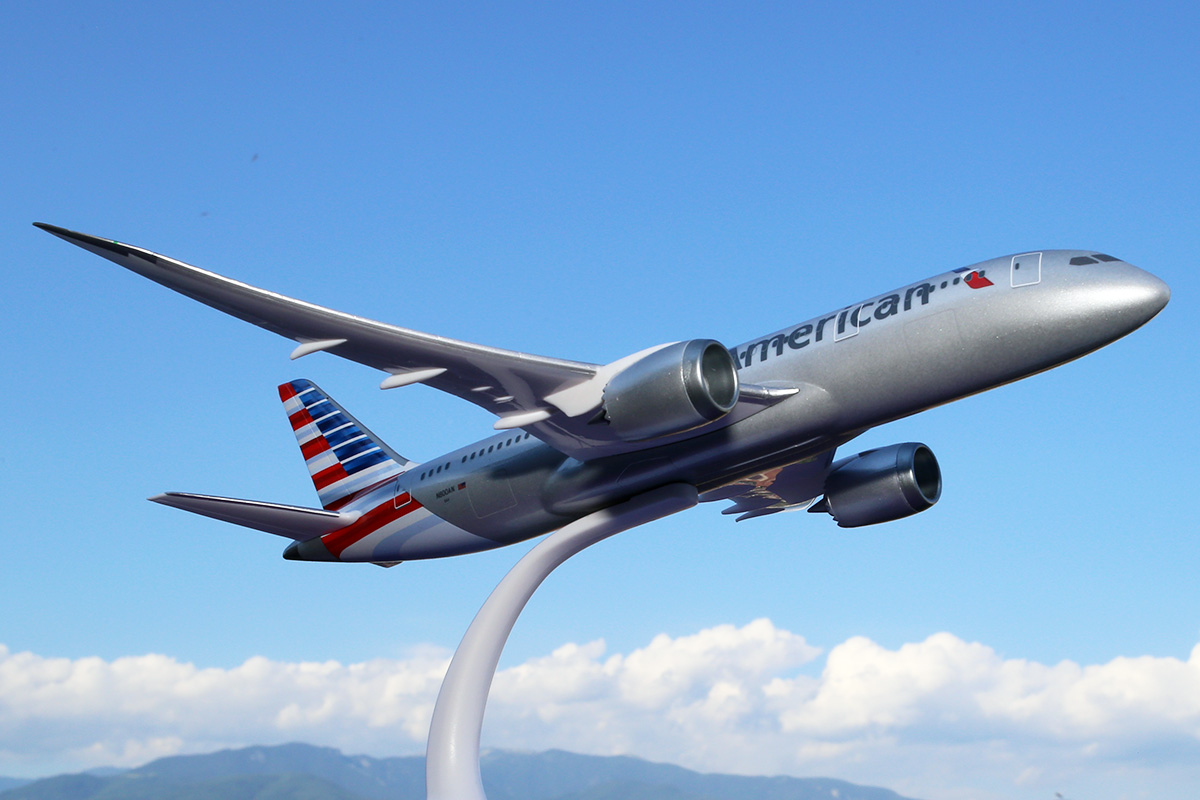
The Boeing 787 Dreamliner is an American long-haul, mid-size wide-body, twin-engine jet airliner manufactured by Boeing Commercial Airplanes. Its variants seat 242 to 335 passengers in typical three-class seating configurations. It is the first airliner with an airframe constructed primarily of composite materials. The 787 was designed to be 20% more fuel-efficient than the Boeing 767, which it was intended to replace. The 787 Dreamliner's distinguishing features include mostly electrical flight systems, raked wingtips, and noise-reducing chevrons on its engine nacelles.
The aircraft's initial designation was the 7E7, prior to its renaming in January 2005. The first 787 was unveiled in a roll-out ceremony on July 8, 2007 at Boeing's Everett factory. Development and production of the 787 has involved a large-scale collaboration with numerous suppliers worldwide. Final assembly takes place at the Boeing Everett Factory in Everett, Washington, and at the Boeing South Carolina factory in North Charleston, South Carolina. Originally planned to enter service in May 2008, the project experienced multiple delays. The airliner's maiden flight took place on December 15, 2009, and flight testing was completed in mid-2011. Boeing has reportedly spent $32 billion on the 787 program.
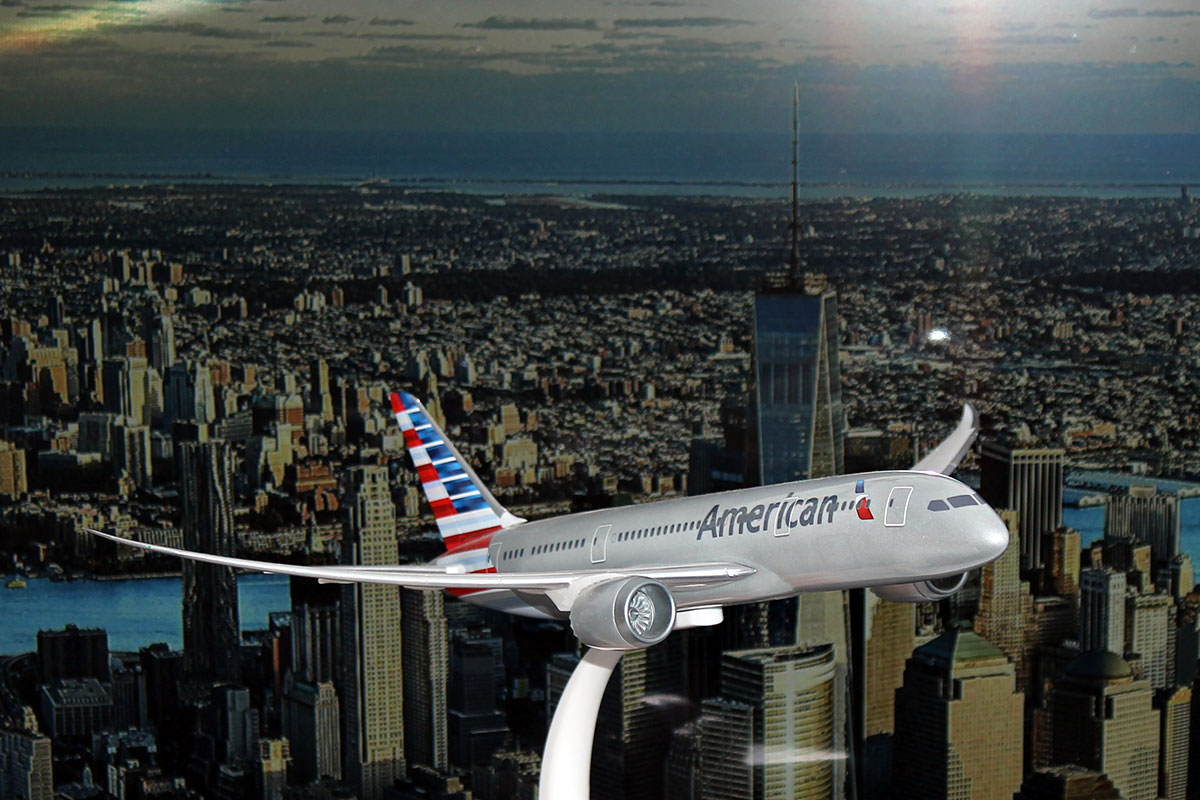
Final US Federal Aviation Administration (FAA) and European Aviation Safety Agency (EASA) type certification was received in August 2011, and the first 787-8 was delivered in September 2011. It entered commercial service on October 26, 2011 with launch customer All Nippon Airways. The stretched 787-9 variant, which is 20 feet (6.1 m) longer and can fly 450 nautical miles (830 km) farther than the -8, first flew in September 2013. Deliveries of the 787-9 began in July 2014; it entered commercial service on August 7, 2014 with All Nippon Airways, with 787-9 launch customer Air New Zealand following two days later. As of January 2019, the 787 had orders for 1,421 aircraft from 72 identified customers.
The aircraft has suffered from several in-service problems related to its lithium-ion batteries, including fires on board during commercial service. These systems were reviewed by both the FAA and the Japan Civil Aviation Bureau. The FAA issued a directive in January 2013 that grounded all 787s in the US, and other civil aviation authorities followed suit. After Boeing completed tests on a revised battery design, the FAA approved the revised design and lifted the grounding in April 2013; the 787 returned to passenger service later that month.
Manufacturer: Boeing Commercial Airplanes
Model: 787-8
Airline: American Airlines
Registration: N800AN
Role: Wide-body twin-engine jet airliner
First flight: December 15, 2009
Introduction: October 26, 2011, with All Nippon Airways
Status: In service
Primary users:
- All Nippon Airways
- Japan Airlines
- American Airlines
- United Airlines
Produced: 2007–present
Number built: 789 as of January 2019
Program cost: US$32 billion (Boeing's expenditure as of 2011)
Unit cost : 787-8: US$248.3M (2019),
Specifications:
Cockpit crew: 2
Seating, 2-class: 242 : 24J @85" + 218Y @32"
Seating, 1-class: Max. 359, exit limit 381
Length: 56.72 m
Wing: 9.59 aspect ratio, 377 m2 area, 32.2° Wing sweep
Wingspan: 60.12 m) span, 6.27 m mean chord.
Height: 16.92 m
Fuselage: Cabin width: 18 ft 0 in (5.49 m) External width: 18 ft 11 in (5.77 m), height: 19 ft 6 in (5.94 m)
Cargo capacity: 136.7 m³, 28 LD3 or 9 (88×125) pallets
MTOW: 227,930 kg
Maximum Payload: 90,500 lb / 43,318 kg
OEW: 264,500 lb / 119,950 kg
Fuel capacity: 33,340 US gal / 126,206 L
Speed Max: Mach 0.90 (516 kn; 956 km/h); Cruise: Mach 0.85 (488 kn; 903 km/h)
Range: 13,620 km
Takeoff: 2,600 m
Ceiling: 43,000 ft (13,100 m)
Engines (×2): General Electric GEnx-1B or Rolls-Royce Trent 1000
Thrust (×2): 64,000 lbf (280 kN)
About the model:
Manufacturer: Herpa SnapFit
Scale: 1:200
The actual aircraft: