From Wikipedia, the free encyclopedia
The Boeing 767 is a mid- to large-size, mid- to long-range, wide-body twin-engine jet airliner built by Boeing Commercial Airplanes. It was Boeing's first wide-body twinjet and its first airliner with a two-crew glass cockpit. The aircraft has two turbofan engines, a conventional tail, and, for reduced aerodynamic drag, a supercritical wing design. Designed as a smaller wide-body airliner than earlier aircraft such as the 747, the 767 has a seating capacity for 181 to 375 people, and a design range of 3,850 to 6,385 nautical miles (4,431 to 7,348 mi; 7,130 to 11,825 km), depending on variant. Development of the 767 occurred in tandem with a narrow-body twinjet, the 757, resulting in shared design features which allow pilots to obtain a common type rating to operate both aircraft.
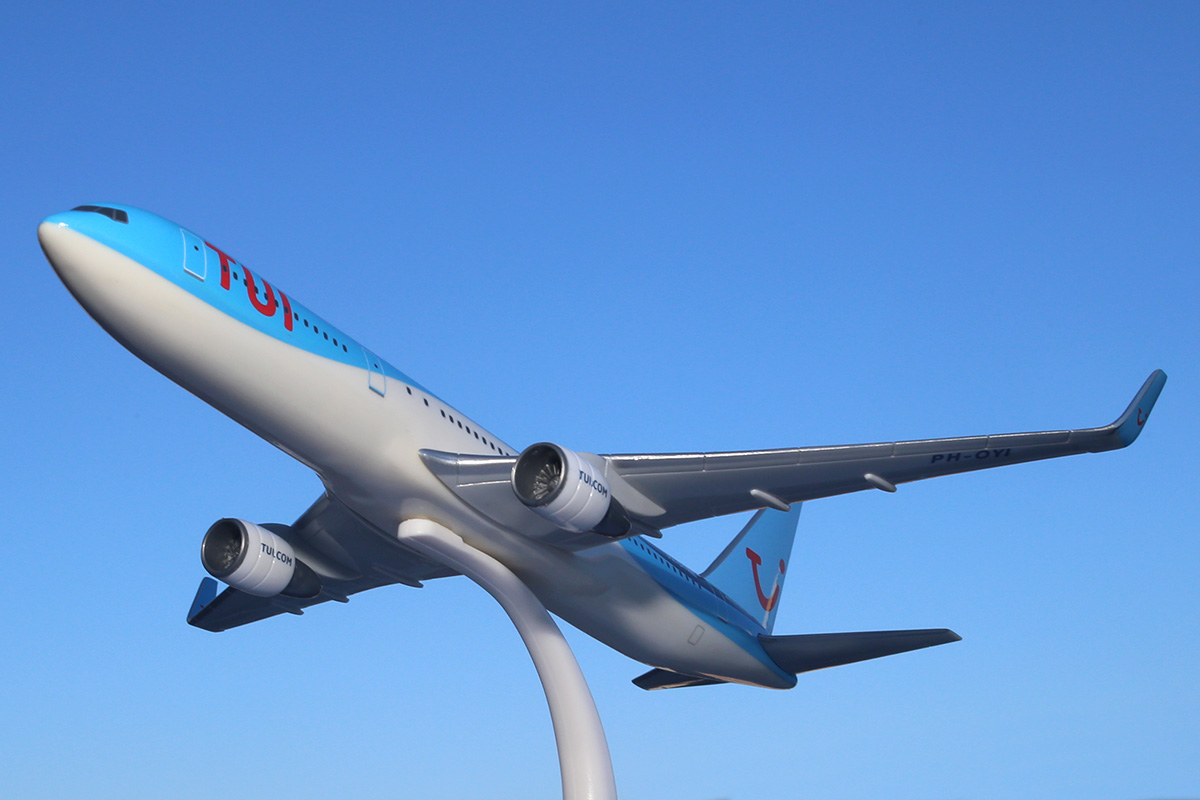
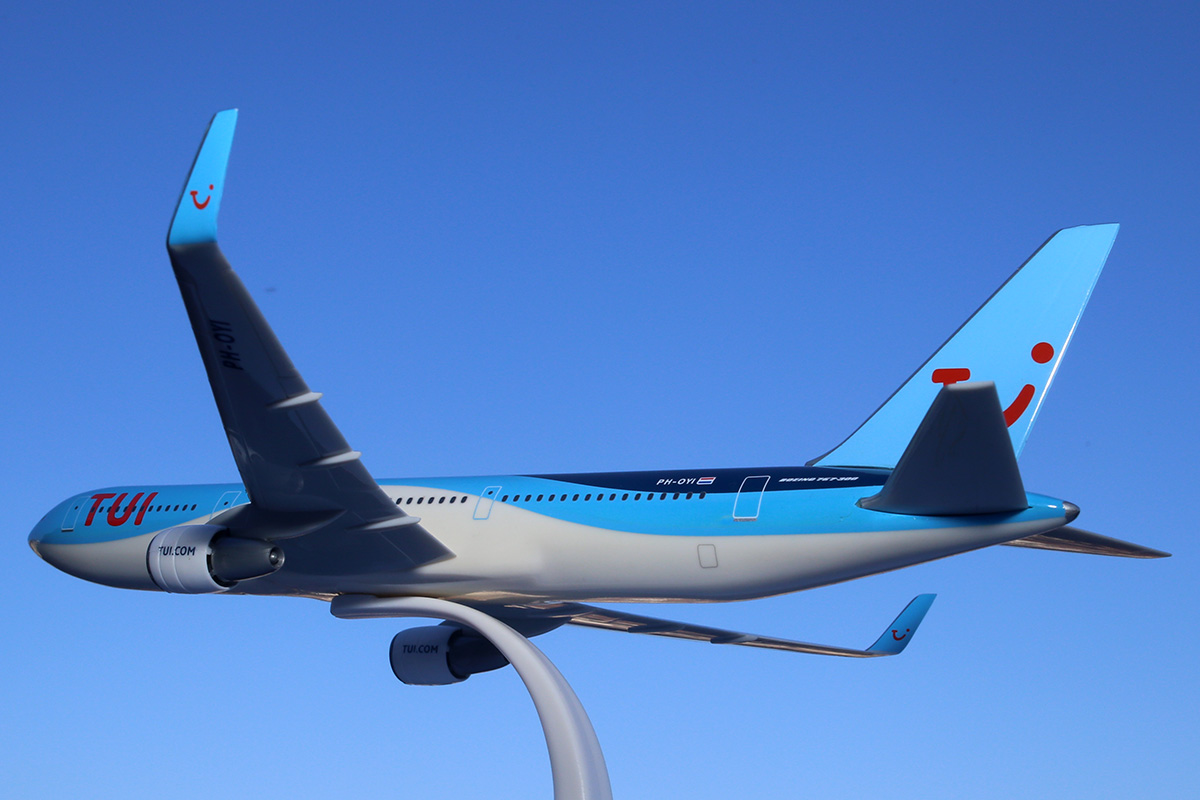
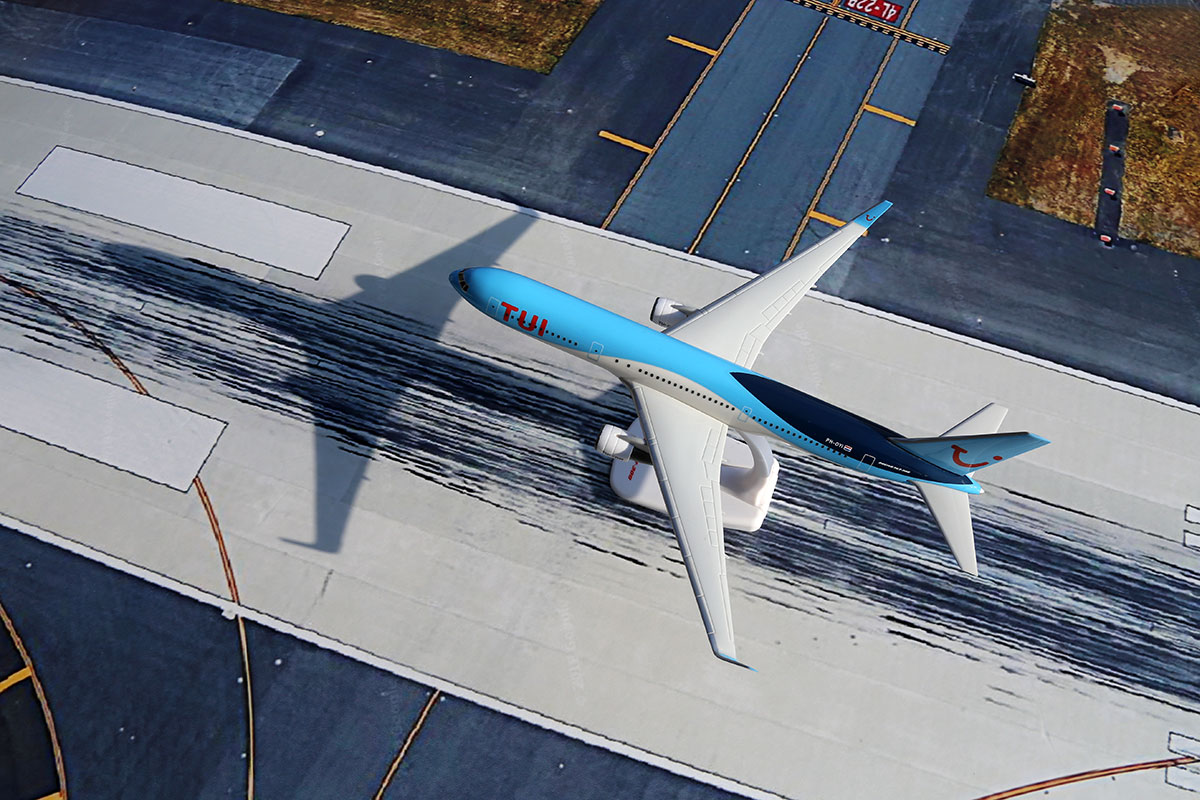
The 767 is produced in three fuselage lengths. The original 767-200 entered service in 1982, followed by the 767-300 in 1986 and the 767-400ER, an extended-range (ER) variant, in 2000. The extended-range 767-200ER and 767-300ER models entered service in 1984 and 1988, respectively, while a production freighter version, the 767-300F, debuted in 1995. Conversion programs have modified passenger 767-200 and 767-300 series aircraft for cargo use, while military derivatives include the E-767 surveillance aircraft, the KC-767 and KC-46 aerial tankers, and VIP transports. Engines featured on the 767 include the General Electric CF6, Pratt & Whitney JT9D and PW4000, and Rolls-Royce RB211 turbofans.
United Airlines first placed the 767 in commercial service in 1982. The aircraft was initially flown on domestic and transcontinental routes, during which it demonstrated the reliability of its twinjet design. The 767 became the first twin-engined airliner to be used on extended overseas flights in 1985. The aircraft was then used to expand non-stop service on medium- to long-haul intercontinental routes. In 1986, Boeing initiated studies for a higher-capacity 767, ultimately leading to the development of the 777, a larger wide-body twinjet. In the 1990s, the 767 became the most frequently used airliner for transatlantic flights between North America and Europe.
The 767 is the first twinjet wide-body type to reach 1,000 aircraft delivered. As of January 2019, Boeing has received 1,244 orders for the 767 from 74 customers with 1,135 delivered. A total of 742 of these aircraft were in service in July 2018. The most popular variant is the 767-300ER with 583 delivered. Delta Air Lines is the largest operator with 77 aircraft. Competitors have included the Airbus A300, A310, and A330-200. Non-passenger variants of the 767 remain in production as of 2019 while the passenger variant's successor, the 787, entered service in 2011.
Manufacturer: Boeing Commercial Airplanes
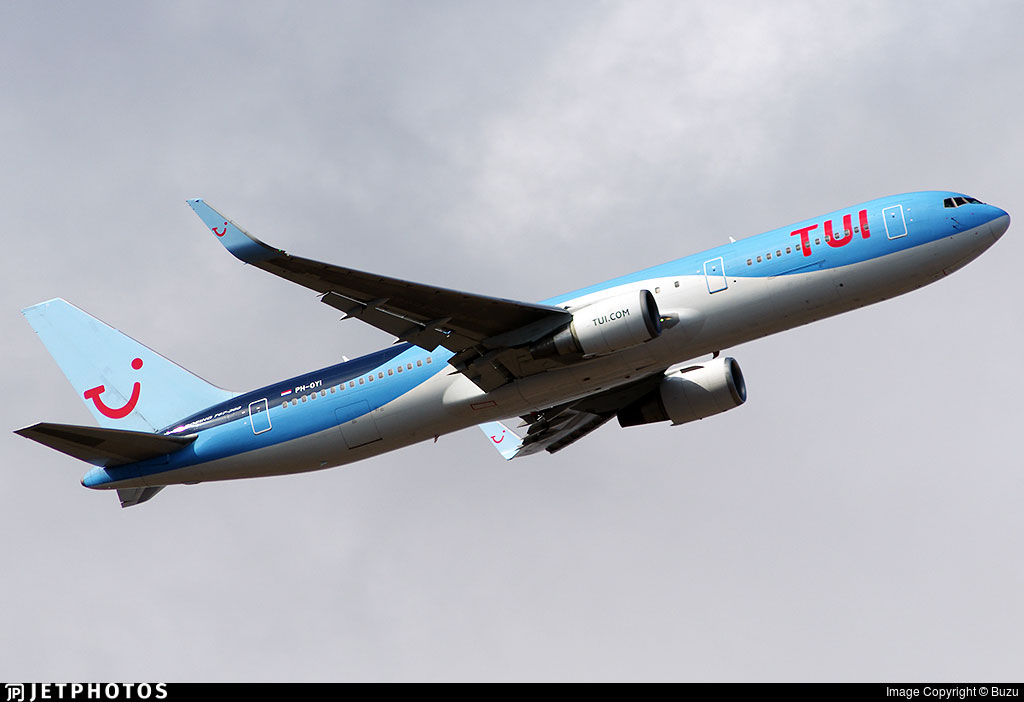
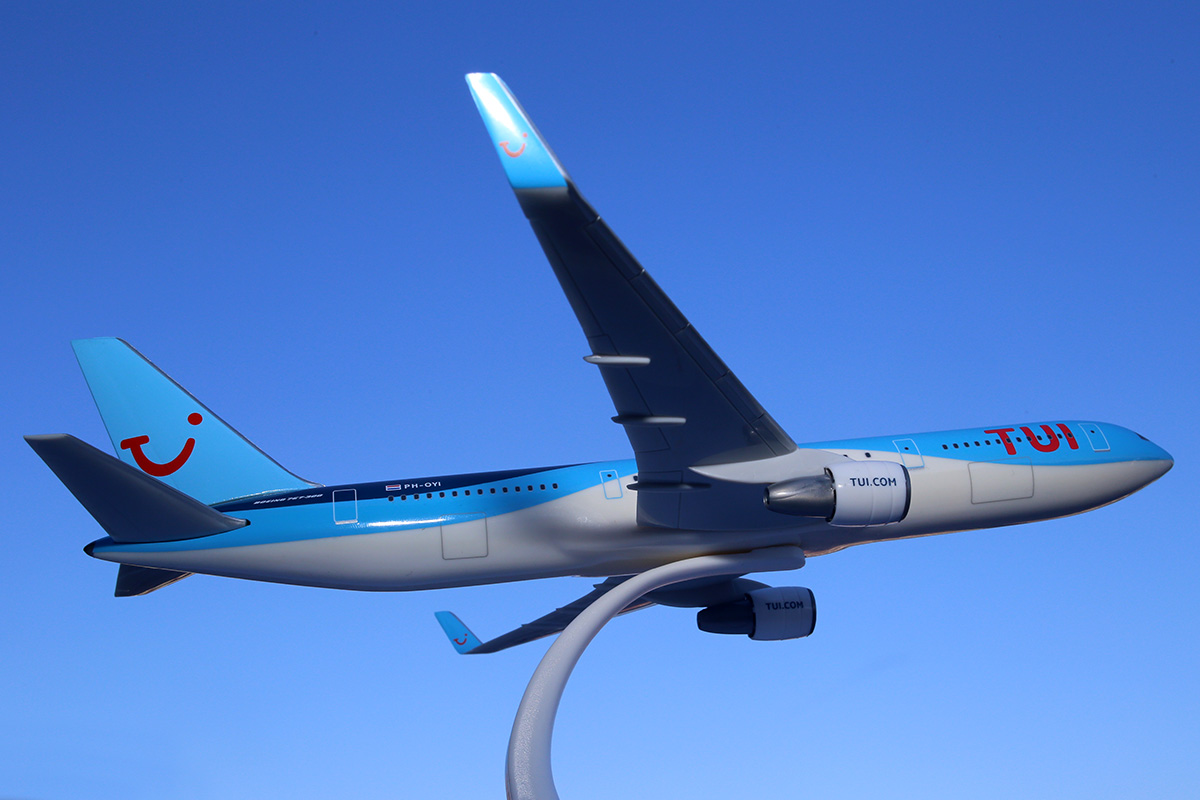
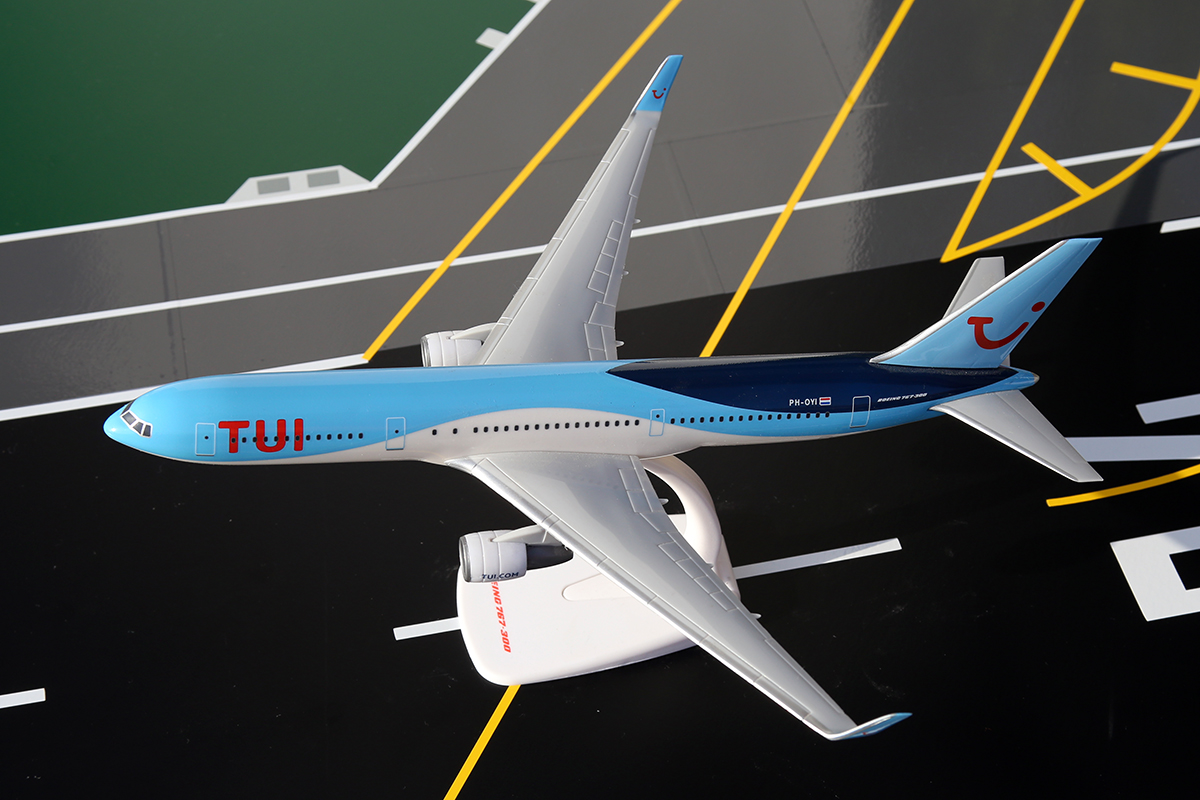
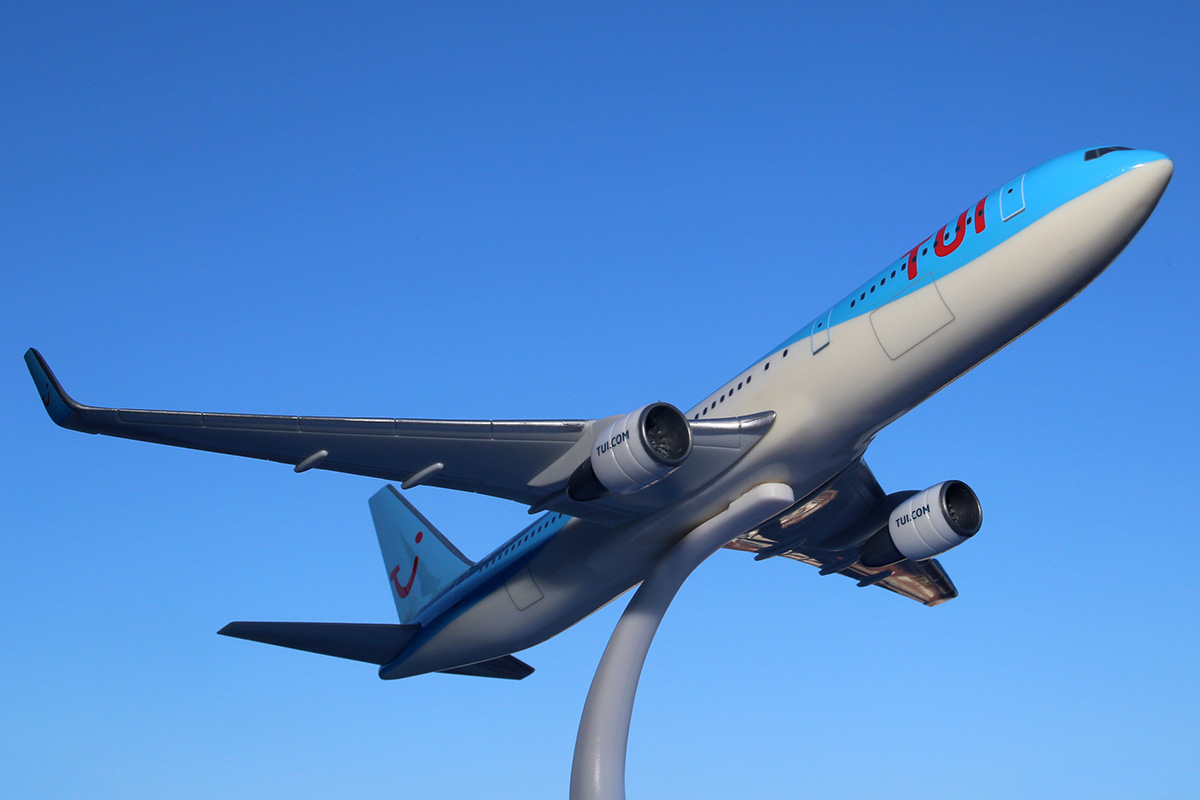
Model: 767-304(ER)
Airline: TUI
Registration: PH-OYI
Role: Wide-body jet airliner
First flight: September 26, 1981
Introduction: September 8, 1982, with United Airlines
Status: In service
Primary users:
- Delta Air Lines
- FedEx Express
- UPS Airlines
- United Airlines
Produced: 1981–present
Number built: 1,135 as of 31 January 2019
Unit cost: (2019 US$ million) 217.9
Variants:
- Boeing E-767
- Boeing KC-46 Pegasus
- Boeing KC-767
- Northrop Grumman E-10 MC2A
Specifications:
Cockpit crew: 2
3-class: 210 (18F, 42J, 150Y)
2-class: 261 (24J, 237Y)
1-class: 290Y (351)
Cargo: 114.1 m³
ULDs: 30 LD2s
Length: 54.94 m
Wingspan: 47.57 m
Wing: 283.3 m², 31.5° sweepback
Fuselage: 17 ft 9 in / 5.41 m height, 16 ft 6 in / 5.03 m width, 186 in/ 4.72 m Cabin width (pp30)
MTOW: 186,880 kg
Max. payload: 43,799 kg
OEW: 90,011 kg
Fuel capacity: 91,380 L
Range: 11,070 km
Cruise Long range: 459 kn (850 km/h)
Maximum speed: 486 kn (900 km/h) at 12,000 m
Ceiling: 13,100 m
Takeoff : 2,650 m
Engines (×2): PW4000 / GE CF6-80 / RB211-524
Thrust (×2): 56,750–61,500 lbf (252–274 kN)
About the model:
Manufacturer: PPC
Scale: 1:200
The actual aircraft: